
🌿 Aniseed Myrtle

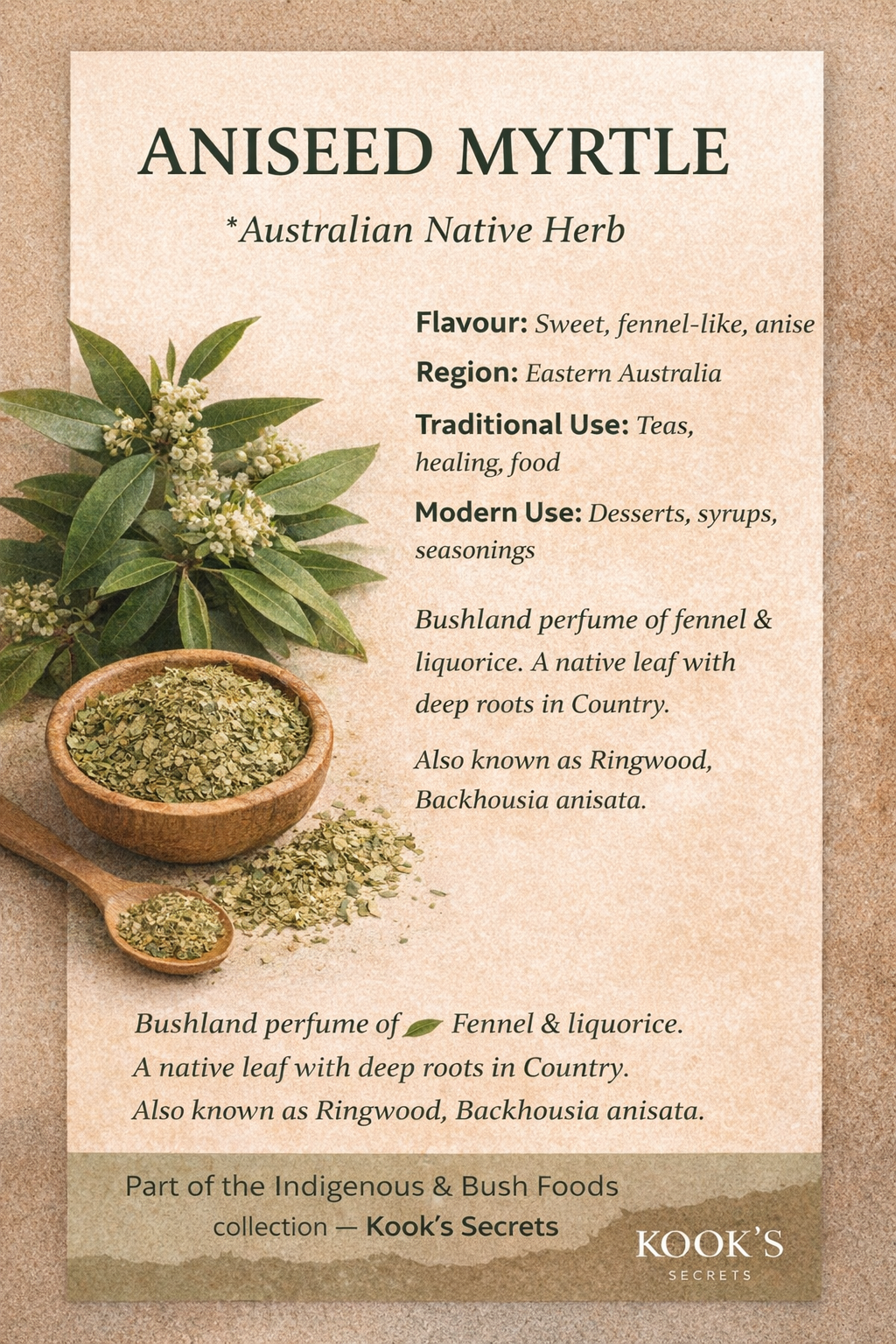
Bushland perfume of Fennel and Liquorice
🌿 Indigenous & Bush Foods –
A collection of ingredients, stories, and culinary traditions rooted in place.

Aniseed Myrtle


This ingredient is part of the Indigenous Australian Food Stories collection
🌿 Aniseed Myrtle — Indigenous Australian Ingredient
Aniseed myrtle is one of Australia’s most distinctive native bush foods. It is prized for its naturally sweet, liquorice-like aroma. It has deep cultural roots in Indigenous Australian food knowledge. Native to the subtropical rainforests of eastern Australia, this fragrant leaf has long been valued for its flavour. It is also appreciated for traditional use.
Today, Indigenous aniseed myrtle is celebrated in modern Australian kitchens for its warm anise flavour. It is often compared to fennel or star anise, but it is softer and more rounded. Ground or dried, it brings gentle sweetness to desserts, baked goods, teas, and contemporary savoury dishes.
Interest in Australian native ingredients is on the rise. Aniseed myrtle stands out as a uniquely local flavour. It connects ancient bush food traditions with modern culinary creativity.
This ingredient is part of the This ingredient is part of the Indigenous & Bush Foods collection.. It honors native Australian ingredients. It also celebrates the deep connection between food, land, and story.
️🌿 Cultural & Historical Context
For thousands of years, Aniseed Myrtle has been known to Indigenous Australians of the eastern rainforest regions. The fragrant leaves were valued for their sweet, liquorice-like aroma and used in traditional food preparation and bush medicines.
Like many native plants, Aniseed Myrtle reflects a deep ecological understanding of Country. Flavour, season, and place are closely connected here. Today, its story continues as chefs and growers respectfully bring this rainforest leaf into contemporary Australian kitchens.
🍽️ Modern Applications
In today’s kitchen, Aniseed Myrtle is prized for its clean, sweet anise character and remarkable versatility.
You’ll find it used in:
- Native dessert infusions and syrups
- Bush-inspired spice blends
- Herbal teas and beverage infusions
- Seafood and poultry seasonings
- Modern Australian pastry work
A small amount goes a long way. Its natural sweetness and fennel-like lift make it a favourite. Many chefs explore native Australian flavours using it.


Ingredients & Beyond Collection
A note from the kook’s kitchen
This is where I share the things that don’t always make it onto the site. I include quiet techniques, ingredient stories, and the small details. These details make cooking better over time.
Shared occasionally. Always useful.