B – ‘Borsch/Borscht’

The abc of Food Cooking and People

A Bowl of Eastern European Soul


Borsch/Borscht
🥣 BORSCH / BORSCHT – A Bowl of Eastern European Soul
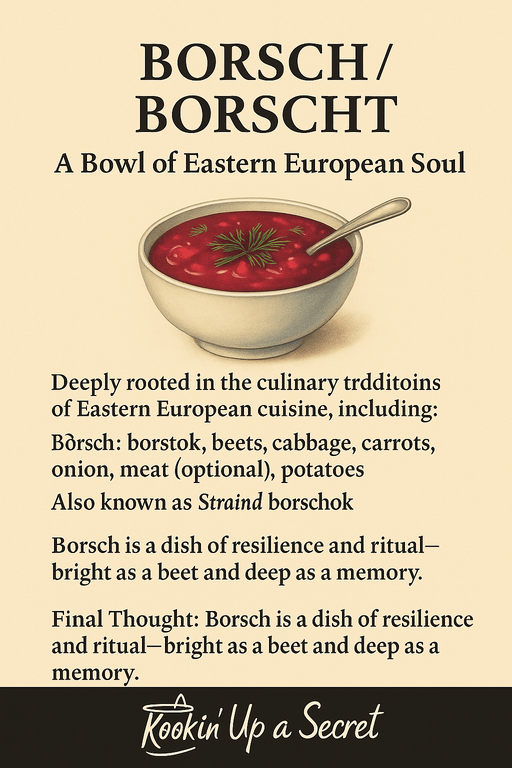
Borsch (or Borscht) is deeply rooted in the culinary traditions of Eastern Europe. It is far more than a beetroot soup. It is a dish steeped in history, hardship, and celebration. Borsch originated in regions of modern-day Ukraine, Poland, and Russia. It has long been considered a national dish by many cultures. Each culture adapts it with their own distinctive twist. Whether made with beef, duckling, or simply vegetables, this vibrant soup remains a symbol of hospitality and home.
💖From Peasant Pots to Imperial Tables
Traditionally prepared with beets, cabbage, potatoes, onions, carrots, and garlic, borsch was originally a practical, hearty meal for agrarian communities. The addition of meat—often beef shin or duck—transformed it into a dish fit for festive occasions. Over time, borsch migrated from humble hearths to the menus of fine restaurants. There, borschok—a clear, strained version—offered elegance without losing its soul.
In Jewish cuisine, borscht was reimagined as a sweet-and-sour beet soup. It is served hot or cold, with or without meat. It is nearly always topped with a generous dollop of sour cream. The cold version, particularly popular in American Jewish communities, is a nostalgic staple. It is available in jars on supermarket shelves. This version is deeply tied to memory and identity. (https://www.kookssecrets.shop/)

🍲A Name with Many Faces
Across borders, borsch wears many names. In Poland, it’s known as barszcz—ranging from beet-based soups to versions laced with wild mushrooms or fermented rye. In Ukraine, borsch is a national pride, often enriched with salo (pork fat) and slow-cooked to deepen the flavour. Variations also abound in Lithuania, Moldova, and Belarus, sometimes incorporating beans or even dried fruit for sweet notes.
🧭Classic Companions
A bowl of borsch is rarely served alone. Traditionally, it arrives with black bread, boiled potatoes, or pirozhki—fluffy buns filled with meat, mushrooms, or cabbage. The hot, sour, and earthy notes of the soup are balanced by the cool creaminess of sour cream. Fresh dill adds a bite to complete the flavor.
🧭 Origins: Ukraine, Russia, Poland, and Eastern Europe
🍲 Key Ingredients: Beets, cabbage, carrots, onion, meat (optional), potatoes
🥄 Variations:
Borschok – strained, clear version
Barszcz – Polish beet soup
Cold Borscht – popular in Jewish-American cuisine
🍽️ Serving Suggestion: Hot or cold, with sour cream and rye bread

🧾 Final Thought
💖Borsch is a dish of resilience and ritual—bright as a beet and deep as a memory. You may sip it from a crystal-clear bowl in a fine restaurant. Alternatively, you can ladle it generously into a mismatched bowl at Grandma’s kitchen table. It nourishes the body. It also nurtures the spirit with every spoonful. 🌿