Auguste Escoffier: The Architect of Modern French Cuisine — kooks stove talk

Writing the Rules of Cooking: A Timeline of Culinary Icons”

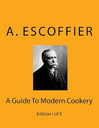
In the grand lineage of culinary innovators, few figures loom as large as Auguste Escoffier. Escoffier is known as the father of modern French cuisine. His influence reaches into every professional kitchen. It also touches every culinary classroom and fine dining experience to this day.
.
‘Auguste Escoffier‘


Part of the series “Writing the Rules of Cooking: A Culinary Timeline”. The series explores the chefs who shaped how the world cooks. It focuses on one era at a time.
Auguste Escoffier: The Architect of Modern French Cuisine
Introduction
In the grand lineage of culinary innovators, few figures loom as large as Auguste Escoffier. Known as the father of modern French cuisine, Escoffier’s influence is profound. It reaches into every professional kitchen, culinary classroom, and fine dining experience even today. Escoffier codified classical recipes in Le Guide Culinaire. He invented the brigade de cuisine system. Escoffier revolutionised how food was prepared and served. He also elevated the chef’s role to one of professionalism and prestige. This blog explores Escoffier’s extraordinary life, his transformative contributions to gastronomy, and the enduring legacy of his work.
The Life of Auguste Escoffier
Humble Beginnings
Auguste Escoffier was born in 1846 in the small village of Villeneuve-Loubet in Provence, France. He began an apprenticeship at his uncle’s restaurant in Nice when he was 13. There, he learned the foundational techniques of French cooking. His early years in the bustling kitchens of the Côte d’Azur laid the groundwork for his disciplined, innovative approach.
Rise to Prominence
Escoffier’s talent and ambition soon took him to Paris, where he worked at the prestigious Le Petit Moulin Rouge. His career flourished when he partnered with renowned hotelier César Ritz. Together, they redefined luxury dining at institutions such as the Savoy Hotel in London and the Ritz Hotel in Paris.
Escoffier’s clientele included royalty, aristocrats, and the social elite. Yet, his philosophy of cuisine remained grounded in simplicity. He focused on seasonality and respect for ingredients.
Le Guide Culinaire: A Monument of Culinary Knowledge
A New Culinary Canon
Published in 1903, Le Guide Culinaire was Escoffier’s crowning achievement. It was a masterwork that organised over 5,000 recipes into a precise, systematic reference for professional chefs. Unlike earlier cookbooks, it focused not on lavish prose but on clarity and structure.
This encyclopaedic volume provided a comprehensive framework for classical French cooking. It includes detailed sections on sauces, soups, fish, poultry, vegetables, and desserts.
Key Innovations in Le Guide Culinaire
Codification of Recipes: Escoffier brought order to French cuisine by standardising recipes and techniques.
Mother Sauces Refined: He expanded and simplified Carême’s list, popularising the five fundamental sauces: béchamel, velouté, espagnole, hollandaise, and tomato.
Reproducibility: Each recipe included precise measurements and instructions, allowing chefs to consistently recreate dishes.
Functional Simplicity: Escoffier stripped away excessive garnishes and unnecessary complexity, favouring elegance and clarity.


The Kitchen Brigade System
Organising the Culinary Army
One of Escoffier’s most enduring contributions was the creation of the brigade de cuisine. This was a hierarchical system that revolutionised the professional kitchen. Inspired by military structure, it assigned specific roles to kitchen staff, improving efficiency, communication, and discipline.
Key Positions in the Brigade:
Chef de Cuisine: Head of the kitchen
Sous-Chef: Second-in-command
Chef de Partie: Station chef (e.g., fish, meat, pastry)
Commis: Junior chef assisting a station
Plongeur: Dishwasher and general helper
This system remains the standard in professional kitchens worldwide and is considered essential for managing high-pressure, high-volume environments.
Escoffier’s Culinary Philosophy
Elegance Through Simplicity
Escoffier believed that food should be both refined and accessible. He removed the ornate flourishes of 18th-century cuisine and focused on harmonising flavours, textures, and presentation.
He championed:
- Seasonality: Using fresh, local produce.
- Waste Reduction: Advocating efficient use of ingredients.
- Dignity of the Chef: Promoting professionalism, proper attire, and respect for the culinary craft.
Escoffier also sought to make dining a pleasant, unhurried experience. He changed from serving all courses at once (service à la française). Instead, he opted for service à la russe, where dishes were served in a logical sequence.

Iconic Dishes and Creations
Auguste Escoffier left behind more than books and systems—he also created some of the most iconic dishes in French cuisine.
Notable Creations:
Peach Melba: A dessert of poached peaches, vanilla ice cream, and raspberry purée, created for opera singer Nellie Melba.
Melba Toast: Thin, crispy toast served as an accompaniment to soups or appetisers.
Tournedos Rossini: A luxurious dish featuring filet mignon, foie gras, and truffle, named in honour of composer Gioachino Rossini.
Crêpes Suzette (popularised): Escoffier helped elevate this flambéed dessert to iconic status.
Each of these dishes exemplified his philosophy of refined simplicity and artistic elegance.
Cultural Influence and Global Impact
A Culinary Diplomat
Escoffier was more than a chef—he was a culinary ambassador. His work brought French cuisine to the global stage, influencing chefs in Britain, America, and across Europe. He worked at the Savoy Hotel in London and the Carlton Hotel. His efforts helped introduce French haute cuisine to the English-speaking world.
He advocated for the education of chefs, better working conditions, and fair pay. His work also promoted the inclusion of women in the culinary profession, particularly in hotel kitchens.
Awards and Recognition
Escoffier received numerous honours during his lifetime, including the Legion of Honour from the French government. He remained active in promoting culinary arts until his death in 1935.


Legacy: The Escoffier Standard
Lasting Educational Influence
Today, Escoffier’s work is the foundation of most classical culinary training. Le Guide Culinaire is still used as a textbook in culinary schools, and his methods are taught as standard practice.
École Escoffier preserves his teachings. The Auguste Escoffier School of Culinary Arts in the United States also keeps his teachings alive. His name is synonymous with excellence, structure, and timeless technique.
The Ethical Kitchen
Escoffier’s emphasis on dignity and respect extended beyond food. He worked tirelessly to improve the lives of chefs and kitchen staff. He helped to professionalise an industry often associated with drudgery. His values of discipline, cleanliness, and organisation remain industry benchmarks.

Conclusion: A Legacy That Endures
Auguste Escoffier did not just refine French cuisine—he redefined it. He developed a systematic approach to recipes. He invented the kitchen brigade system. His dedication to elegance and efficiency created the blueprint for modern professional cooking.
His legacy lives on in every perfectly reduced sauce, every meticulously plated dish, and every well-run kitchen. Escoffier demonstrated that cooking is both art and science. He showed that a chef can be a craftsman and a leader.
We honour Escoffier by recognising a man who turned the stove into a stage. He transformed the kitchen into a cathedral of craft. His influence will continue to shape the culinary world for generations to come..