
C – ‘Cumin’

Ingredients A–Z: A World of Flavour, One Ingredient at a Time

C- ‘Cumin’
‘Cumin’


Part of the Ingredients A–Z series → C
🌾 Cumin
🌾 Ancient. Grounding. Indispensable.
Cumin is a spice made from the dried seeds of a plant in the parsley family. It is valued for its warm, earthy aroma. It also has a slightly bitter, nutty flavour 🌿. The seeds are slender and ridged, pale brown in colour, and release their full fragrance when lightly toasted or ground. Cumin has been used for thousands of years. It remains vital in Indian, Pakistani, Middle Eastern, and South American cooking 🍛🌍.
📜 Historically, cumin was also popular in Medieval Europe, where it appeared in breads, cheeses, and meat dishes. At the time, spices like cumin were prized not only for flavour but also for their perceived medicinal properties. Over the centuries, its use in European cooking declined. Meanwhile, it became firmly embedded in the spice traditions of Asia, North Africa, and the Americas.
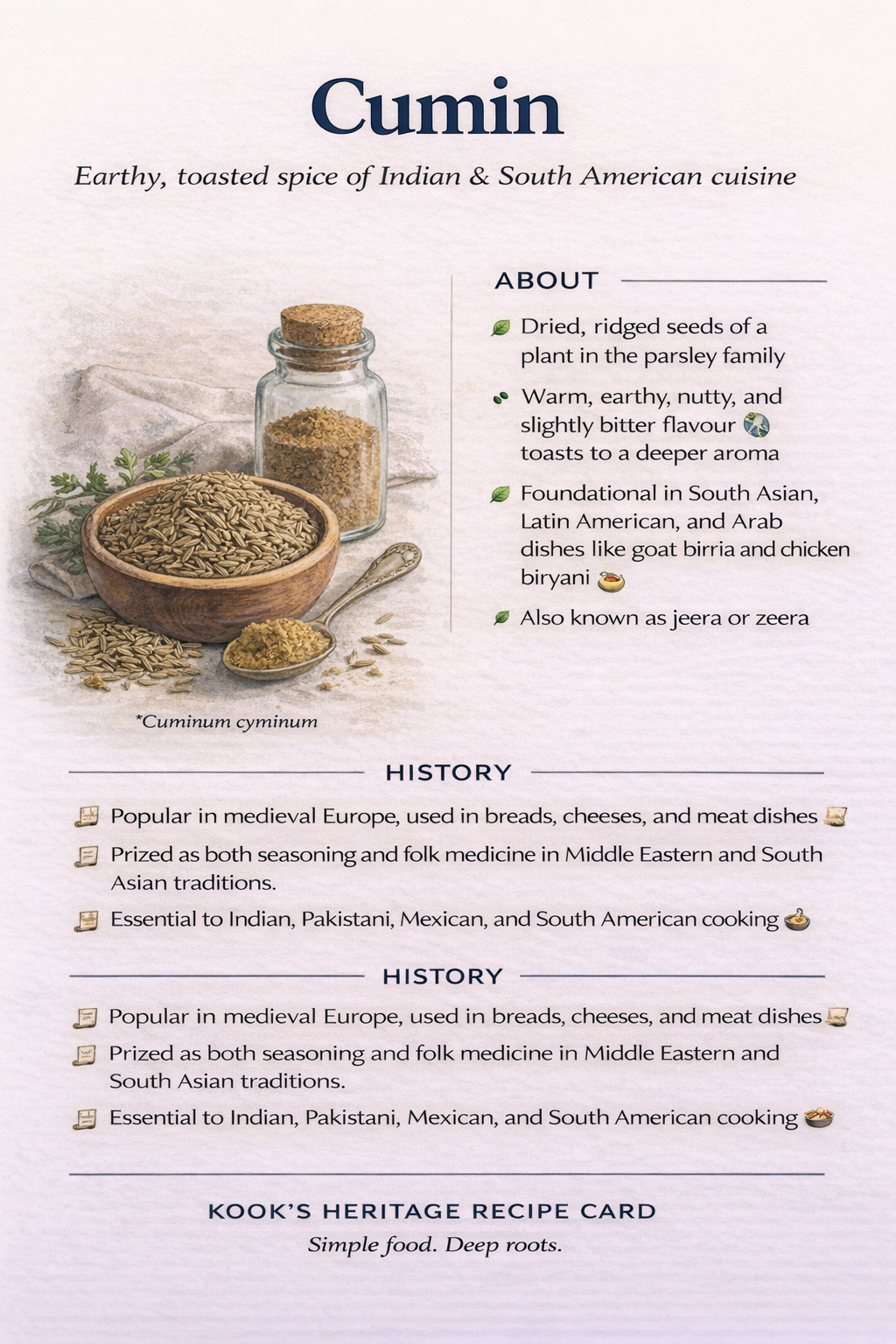
🔥 In modern kitchens, cumin is best known as one of the core seasonings in curry powders. It provides depth and warmth rather than heat. It is also essential in dishes such as dals, stews, rice dishes, spice rubs, and sausages. Whole seeds are often bloomed in hot oil to release their aroma. Ground cumin is used to season sauces and marinades.
🌿 Cumin is known by many names across cultures, including jeera or zeera, reflecting its wide geographic reach. Despite its strong aroma, it works quietly in the background, binding flavours together rather than dominating them.
🌾 Earthy, ancient, and indispensable — cumin is the backbone of countless cuisines.


A note from the kook’s kitchen
This is where I share the things that don’t always make it onto the site. I include quiet techniques, ingredient stories, and the small details. These details make cooking better over time.
Shared occasionally. Always useful.